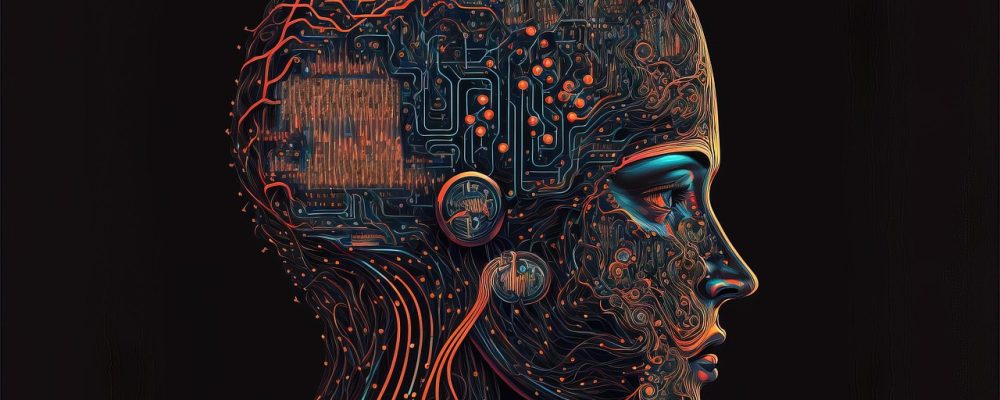
1. Generative Design: The End of “Trial and Error” 

Traditionally, the design process was linear. An engineer would sketch a part, model it in CAD, simulate it (FEA), find a weak spot, and redesign it. This iteration loop could take days or weeks.
Generative Design flips this process upside down. Instead of drawing the part, the engineer defines the constraints:
- Loads: How much weight must it hold?
- Materials: Titanium, Steel, or Plastic?
- Manufacturing Method: CNC Machining or 3D Printing?
The AI then explores the entire solution space, generating thousands of design options in minutes. The results often look organic—like bone structures or tree roots—because the AI places material only where it is structurally needed.

2. The Era of “Digital Twins”

Imagine having a virtual replica of a physical asset—a bridge, a jet engine, or an entire factory—that behaves exactly like the real thing in real-time. This is a Digital Twin.
Sensors on the physical asset collect data (temperature, pressure, vibration) and feed it to the digital model. Engineers can then run simulations on the “Twin” to see what happens if they increase the load or change a component, without risking the actual structure.
For Civil Engineers, this means monitoring the health of a bridge 24/7. If a crack propagates or the concrete degrades, the Digital Twin alerts the maintenance team immediately.

3. AI in Construction: Safety & Computer Vision

Construction sites are chaotic and dangerous. AI is stepping in to serve as an unblinking safety officer.
Using Computer Vision, cameras on-site can analyze video feeds in real-time to detect safety violations. For example:
- Is a worker entering a hazardous zone without a helmet?
- Is a vehicle moving too close to an excavation pit?
- Are the scaffolding structures stable?
Beyond safety, AI helps in logistics. It can track material usage, ensuring that the amount of concrete ordered matches the amount poured.
(Speaking of concrete, accurate estimation is key to cost control. Always double-check your quantities with a Concrete Volume Calculator before placing an order).

4. Predictive Maintenance: Fixing Before Failing

In the past, maintenance was “Reactive” (fix it when it breaks) or “Preventive” (fix it on a schedule). AI introduces Predictive Maintenance.
By analyzing historical data and sensor inputs, Machine Learning algorithms can predict equipment failure with over 90% accuracy. They can tell a plant manager: “Bearing #3 on Pump A will seize in 48 hours.”
This eliminates unplanned downtime, which costs the manufacturing industry roughly $50 billion annually. It shifts the engineer’s role from a “firefighter” to a strategist.

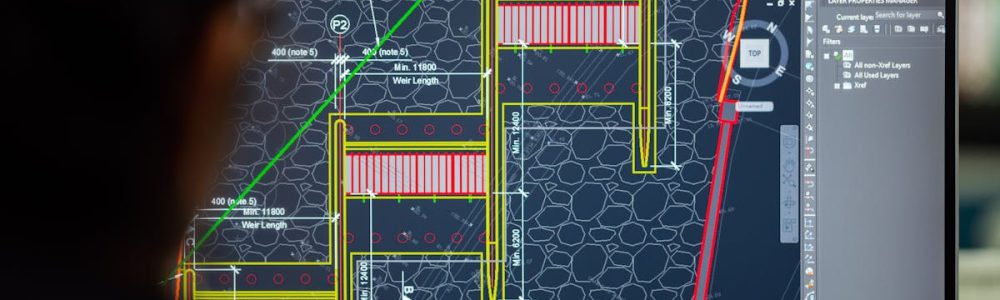
6. The “Black Box” Problem & Ethics

With great power comes great responsibility. One major challenge with Deep Learning is the “Black Box” phenomenon. An AI might output a perfect design, but it cannot explain why it chose that specific geometry.
In fields like Civil and Aerospace engineering, where human lives are at stake, “because the computer said so” is not an acceptable answer. Engineers must rigorously validate AI-generated solutions against physical laws and safety codes (ACI, ASTM, Eurocode).
Liability: If an AI-designed bridge collapses, who is responsible? The software company? The engineer? These legal and ethical questions are still being debated.

7. Will AI Replace Engineers?
The short answer is: No.
The nuanced answer is: AI will replace “calculators,” not “creators.”
AI excels at processing data, optimizing patterns, and performing repetitive tasks. However, it lacks creativity, empathy, leadership, and the ability to understand complex human needs. An AI cannot negotiate with a difficult client, lead a construction crew, or make ethical judgment calls.
The engineer of the future will be a hybrid: part physicist, part data scientist, and part project manager. The most valuable skill in 2030 will not be calculating a beam’s deflection by hand, but knowing how to prompt the AI to do it and verifying the result.
Final Verdict
Don’t compete with robots; collaborate with them. Learn the tools, understand the data, and focus on the human elements of engineering that algorithms can’t touch.
 Start Optimizing Today: While AI handles the big data, ensure your site calculations are precise with our free Suite of Engineering Calculators.