
How Rockets Work: The Basic Principle Behind Space Flight
Rockets have always fascinated humanity. From ancient fire arrows to modern spacecraft capable of leaving Earth entirely, rockets represent one of the greatest achievements of engineering and physics. Yet despite their power and complexity, the basic principle behind how rockets work is surprisingly simple.
So how does a rocket lift itself off the ground, travel through the atmosphere, and continue moving through the vacuum of space where there is no air at all?
This article explains how rockets work, step by step, focusing on the real physics behind rocket propulsion—without unnecessary complexity, but without oversimplifying the science either.
The Fundamental Idea Behind Rocket Motion
At its core, rocket motion is based on Newton’s Third Law of Motion:
For every action, there is an equal and opposite reaction.
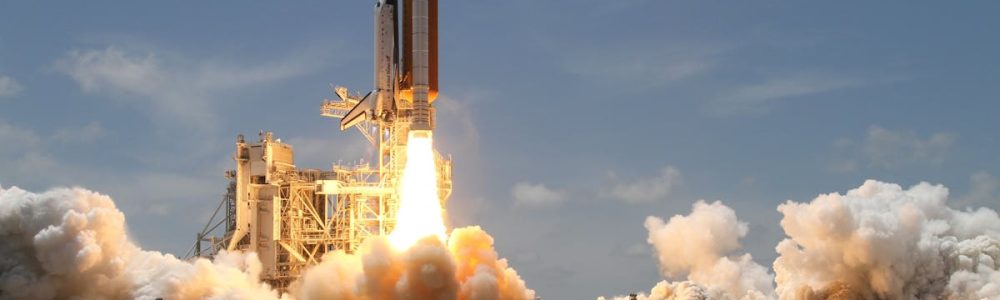
A rocket moves forward because it pushes mass backward at high speed. Unlike airplanes, rockets do not rely on air, wings, or lift. They work by expelling mass in one direction to move in the opposite direction.
This simple idea is what allows rockets to work not only on Earth, but also in space.
Why Rockets Do Not Need Air to Fly
One of the most common misconceptions is that rockets need air to push against. This is not true.
Airplanes need air because:
Wings generate lift by interacting with airflow
Engines rely on oxygen for combustion
Rockets are different.
Rockets:
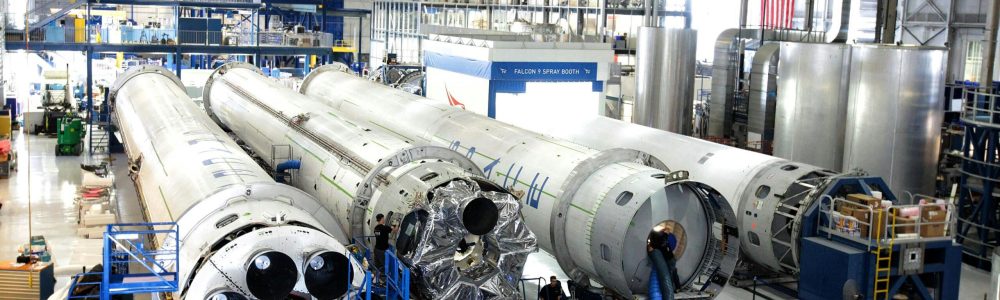
Carry both fuel and oxidizer
Generate thrust internally
Can operate in a vacuum
This is why rockets can function in outer space, where there is no air at all.
Thrust: The Force That Moves a Rocket
The force that pushes a rocket upward is called thrust.
Thrust is created when:
Fuel and oxidizer burn in a combustion chamber
Hot gases expand rapidly
These gases are expelled through a nozzle at very high speed
As the gases rush out the back, the rocket experiences an equal force pushing it forward.
The faster and more mass the rocket expels, the greater the thrust.
The Role of the Rocket Engine
A rocket engine has several key components:
Combustion chamber
Fuel and oxidizer injectors
Nozzle
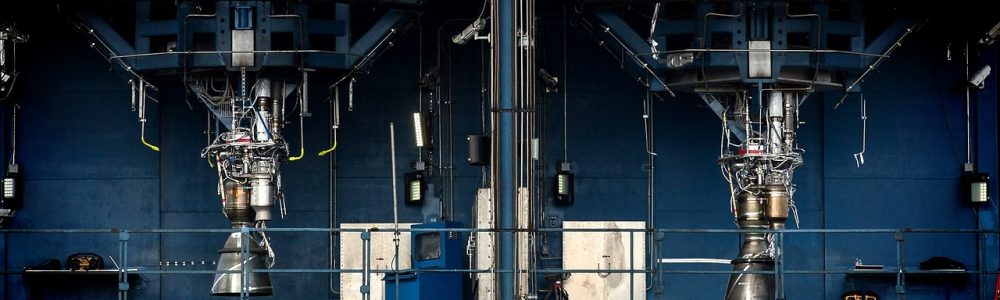
Inside the combustion chamber, fuel and oxidizer mix and burn, creating extremely hot, high-pressure gases. These gases are forced through a nozzle, which converts pressure into velocity.
The nozzle is carefully shaped to:
Accelerate exhaust gases
Direct flow efficiently
Maximize thrust
Even small changes in nozzle design can dramatically affect performance.

Why the Nozzle Shape Matters
Rocket nozzles are not just pipes. They are precisely engineered shapes, often called de Laval nozzles.
These nozzles:
Narrow at the throat
Expand outward at the exit
This shape allows exhaust gases to:
Reach supersonic speeds
Expand efficiently as pressure drops
In space, where external pressure is low, expanded nozzles are especially effective.
Fuel and Oxidizer: Two Parts of the Equation
Unlike engines that rely on atmospheric oxygen, rockets carry everything they need.
Fuel
The substance that burns and releases energy.
Examples:
Liquid hydrogen
Kerosene
Solid propellant compounds
Oxidizer
The substance that provides oxygen for combustion.
Examples:
Liquid oxygen
Ammonium perchlorate
The combination of fuel and oxidizer determines:
Energy output
Efficiency
Engine complexity

Solid vs Liquid Rocket Engines
There are two main types of rocket engines.
Solid Rocket Engines
Fuel and oxidizer are mixed into a solid form
Simple and reliable
Cannot be turned off once ignited
Used in:
Boosters
Military applications
Emergency systems
Liquid Rocket Engines
Fuel and oxidizer stored separately
Flow is precisely controlled
Can be throttled or shut down
Used in:
Space launch vehicles
Spacecraft maneuvering systems
Liquid engines offer higher efficiency but are more complex.

Why Rockets Are So Powerful
Rockets need enormous power to overcome gravity.
To lift off:
Thrust must exceed the rocket’s weight
Acceleration must overcome Earth’s gravitational pull
This is why rockets:
Are extremely loud
Produce intense heat
Consume massive amounts of fuel
Most of a rocket’s mass at launch is fuel.
The Rocket Equation: Why Fuel Matters So Much
One of the most important equations in rocket science is the Tsiolkovsky Rocket Equation.
It shows that:
The final speed of a rocket depends on exhaust velocity
Increasing fuel mass increases potential speed
Carrying fuel adds weight, which reduces efficiency
This creates a difficult balance between fuel, mass, and performance.

Staging: Why Rockets Have Multiple Sections
To solve the fuel-weight problem, rockets use staging.
Stages work by:
Burning fuel
Detaching empty tanks
Reducing total mass
As stages drop away, the remaining rocket becomes lighter and more efficient.
This is why most launch vehicles have multiple stages stacked on top of each other.
Guidance and Control Systems
Rockets must be precisely controlled during flight.
Control methods include:
Gimbaled engines (tilting the engine)
Control fins (in atmosphere)
Reaction control thrusters (in space)
Modern rockets rely heavily on:
Sensors
Gyroscopes
Flight computers
Even small deviations must be corrected instantly.
Why Rockets Follow Curved Paths
Rockets do not go straight up forever.
After launch, they:
Gradually tilt sideways
Build horizontal speed
Enter orbit instead of falling back
Orbit is achieved by moving sideways fast enough to continually “miss” the Earth while falling toward it.
Heat, Pressure, and Extreme Conditions
Rocket engines operate under extreme conditions:
Temperatures exceeding 3,000°C
Enormous internal pressures
Intense vibration
Materials used in rocket engines must withstand:
Thermal stress
Mechanical loads
Chemical corrosion
This is one of the biggest engineering challenges in spaceflight.

Why Rockets Are Expensive
Rocket development requires:
Advanced materials
Precision manufacturing
Extensive testing
Redundancy and safety systems
A single failure can destroy years of work, which is why rocket engineering demands extreme reliability.
Reusable Rockets: Changing the Future of Spaceflight
Traditionally, rockets were used only once. Today, reusable rockets are transforming space exploration.
Reusable systems:
Reduce cost
Improve launch frequency
Allow faster innovation
Landing rockets back on Earth requires precise control and real-time calculations.

Common Myths About Rockets
“Rockets push against the air.”
False. They push against expelled mass.
“Rockets stop working in space.”
False. Space is where they work best.
“Bigger rockets are always better.”
False. Efficiency matters more than size.
Why Rocket Science Is Considered Difficult
Rocket science combines:
Physics
Chemistry
Materials science
Control systems
Computer engineering
Small mistakes can lead to catastrophic failure, which is why rocket science has a reputation for difficulty.

Conclusion: Simple Principle, Extreme Execution
At its heart, a rocket operates on a simple principle:
Push mass backward to move forward.
What makes rockets extraordinary is not the idea, but the precision, power, and engineering required to execute it under extreme conditions.
Rockets represent humanity’s ability to turn basic physical laws into machines capable of leaving our planet entirely.
They are proof that with enough understanding, even gravity can be challenged.