
Why Mars Landings Are So Difficult
Landing on Mars sounds simple in theory. You build a spacecraft, send it across space, slow it down, and place it gently on the surface. After all, we land planes on Earth every day.
But in reality, landing on Mars is one of the hardest engineering challenges humanity has ever faced. More than half of all Mars missions have failed—many of them during landing.
NASA engineers even have a nickname for this phase of the mission:
“Seven Minutes of Terror.”
So why is landing on Mars so difficult?

Mars Is in the Worst Possible Middle Ground
Mars sits in an engineering nightmare zone.
It has too much atmosphere for simple vacuum landings
But not enough atmosphere for normal parachutes
On Earth:
Thick atmosphere helps slow vehicles
Parachutes work extremely well
On the Moon:
No atmosphere, but low gravity
Rockets handle everything
Mars gives you:
Thin atmosphere
Strong gravity
Limited braking options
Worst of both worlds.
The Atmosphere Problem
Mars’ atmosphere is about 1% as dense as Earth’s.
That causes multiple issues:
Not enough air resistance to slow down fast spacecraft
Parachutes provide limited drag
Heat shields still face extreme temperatures
You hit the atmosphere too fast, but there’s not enough air to help you slow down.
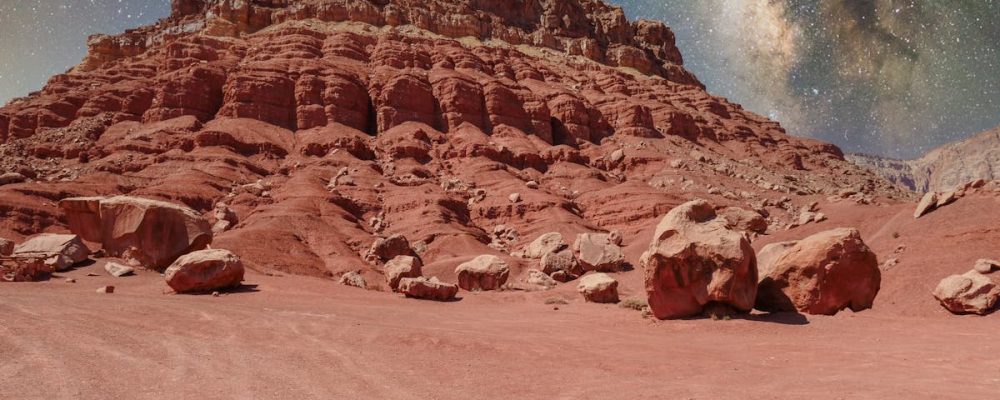
Entering Mars at Insane Speeds
When a spacecraft reaches Mars, it’s moving at:
Around 20,000 km/h
At that speed:
You can’t simply fire engines immediately
Fuel requirements would be massive
Instead, engineers rely on:
Atmospheric drag
Heat shields
Controlled descent
All while traveling faster than a bullet.
Heat: A Massive Threat
Even though Mars has a thin atmosphere, entering it at high speed creates extreme heat.
Friction heats the air
Compressed gas transfers heat to the spacecraft
Temperatures can exceed 1,500°C
Heat shields must:
Absorb heat
Burn away safely
Protect internal systems
One crack or flaw can destroy the mission.
Why Parachutes Aren’t Enough
Parachutes on Mars are:
Enormous
Deployed at supersonic speeds
Pushed to their physical limits
Even the largest parachutes:
Only slow the spacecraft partway
Cannot achieve safe landing speed alone
At best, parachutes buy time—not safety.
The Gravity Problem
Mars’ gravity is:
About 38% of Earth’s
Sounds helpful, right?
Not really.
It’s:
Strong enough to pull spacecraft down fast
Weak enough to complicate descent calculations
This creates unstable descent conditions that must be corrected constantly.
Communication Delay: No Human Control
Mars is far away.
Signals take:
4 to 24 minutes one-way
That means:
Engineers cannot control landing in real time
The spacecraft must land itself
Every decision—engine firing, parachute deployment, altitude checks—must be automated.
No second chances.

Why Autonomous Systems Are Mandatory
During landing:
Conditions change rapidly
Sensors must adapt instantly
Computers must decide faster than humans
The spacecraft must:
Read terrain
Measure speed
Adjust thrust
Avoid hazards
All without outside help.
Terrain Is Unforgiving
Mars isn’t flat.
It has:
Rocks
Slopes
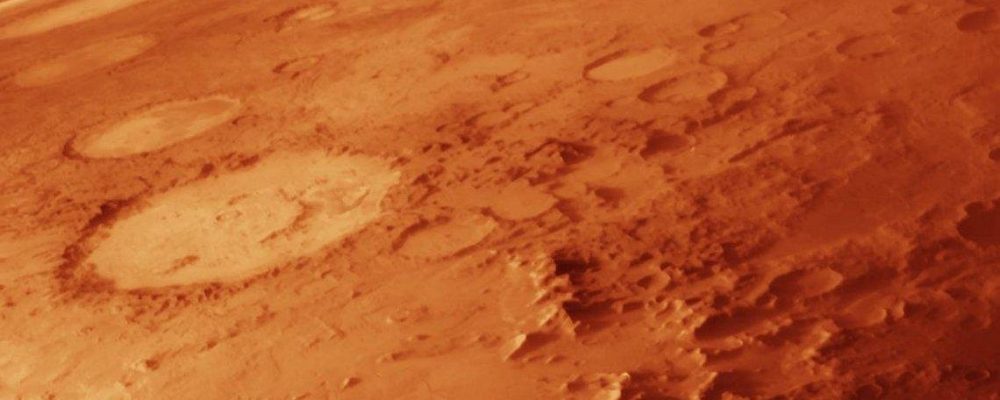
Craters
Dust
Landing in the wrong spot means:
Tipping over
Breaking landing gear
Losing communication
Modern missions use terrain-relative navigation to detect hazards mid-descent.

The “Seven Minutes of Terror” Explained
From atmospheric entry to landing:
Takes about seven minutes
Everything must work perfectly
One failure = mission lost
This includes:
Heat shield deployment
Parachute deployment
Radar activation
Engine ignition
Final descent
No backups. No retries.
Why Rockets Alone Don’t Solve It
Using rockets from the start:
Requires massive fuel
Adds weight
Reduces payload capacity
Fuel weight makes:
Launch harder
Travel more expensive
Every kilogram matters.

The Sky Crane: A Crazy but Brilliant Solution
NASA introduced a unique system for rovers like Curiosity and Perseverance.
The sky crane:
Uses rockets to hover
Lowers the rover on cables
Gently places it on the ground
This avoids:
Dust damage
Hard impacts
Tip-over risk
It looks insane—but it works.
Dust: The Silent Enemy
Mars dust:
Is extremely fine
Covers solar panels
Interferes with sensors
During landing:
Dust clouds reduce visibility
Sensors can give false readings
Systems must anticipate this chaos.

Why Smaller Missions Often Fail
Small landers:
Have limited redundancy
Less powerful computers
Fewer correction options
Mars doesn’t forgive shortcuts.
That’s why:
Large agencies succeed more often
Smaller missions take higher risks
Atmospheric Variability Makes Things Worse
Mars’ atmosphere changes:
By season
By dust storms
By temperature
Density variations affect:
Drag
Parachute performance
Timing
Landing plans must adapt dynamically.
Why Testing on Earth Isn’t Enough
Mars conditions cannot be perfectly simulated.
On Earth:
Gravity is stronger
Atmosphere is thicker
Test environments are limited
Engineers rely on:
Simulations
Partial tests
Mathematical models
Real Mars landings are always the true test.
Why Every Successful Landing Is a Big Deal
Each Mars landing:
Advances technology
Teaches engineers what works
Reduces future risk
Failures aren’t wasted—they provide critical data.
Mars exploration is iterative, not instant.
Why Mars Is Harder Than the Moon
The Moon:
No atmosphere
Low gravity
Simple descent
Mars:
Thin atmosphere
Stronger gravity
Complex descent
Mars is objectively harder to land on.

The Future of Mars Landings
Future missions will use:
Better autonomous navigation
More powerful computers
Smarter landing algorithms
Human missions will require:
Even more precision
Larger landing systems
Zero tolerance for failure
Common Myths About Mars Landings
“It’s just like landing on Earth.”
Not even close.
“Parachutes do most of the work.”
They only help briefly.
“Failures mean bad engineering.”
Failures are part of learning.

Conclusion: Mars Doesn’t Make It Easy
Mars sits in a perfect storm of challenges:
Thin atmosphere
Strong gravity
Communication delays
Harsh terrain
Landing there requires:
Advanced physics
Autonomous intelligence
Extreme precision
That’s why every successful Mars landing is celebrated—not because it’s routine, but because it’s one of the hardest things humans know how to do.
Mars doesn’t welcome visitors.
We earn every landing.