
How Fast Electricity Actually Travels
The Truth Behind the Speed of Power
Electricity feels instant. You flip a switch, and the light turns on immediately. You plug in your phone, and power starts flowing right away. This leads to a common assumption: electricity must travel at the speed of light.
The reality is more interesting — and more confusing — than that.
Electricity does move incredibly fast, but not in the way most people imagine. To understand how fast electricity actually travels, we need to separate electron motion, signal propagation, and energy transfer.

The Big Misconception: Electrons Racing Through Wires
Many people picture electricity as electrons shooting through wires at near light speed. In reality, electrons move very slowly.
In a typical household wire:
Electron drift speed is only millimeters per second
Sometimes even slower than walking speed
Yes, you read that right. The electrons themselves crawl.
So why does electricity seem instant?
Drift Speed vs Signal Speed
Electricity involves two different “speeds”:
1. Electron Drift Speed
This is how fast individual electrons move through a conductor. Due to constant collisions with atoms inside the wire, their movement is slow and random.
Think of it like:
A crowded hallway
People bumping into each other
Slow overall movement
This speed is painfully slow and not what powers your devices instantly.

2. Electrical Signal Propagation Speed
This is the speed at which the electrical effect travels through the circuit.
When you flip a switch:
An electric field is established almost instantly
Electrons everywhere in the circuit begin moving at once
Energy transfer begins immediately
This signal travels at a significant fraction of the speed of light.
So How Fast Is the Signal?
In most electrical wires, the electrical signal travels at:
50% to 99% of the speed of light
Depending on the material and insulation
That’s roughly:
150,000 to 300,000 kilometers per second
This is why lights turn on without noticeable delay, even though electrons themselves move slowly.

A Simple Analogy: The Water Pipe Effect
Imagine a long pipe completely filled with water.
When you push water in at one end:
Water immediately comes out the other end
Even though individual water molecules barely move
Electricity works the same way:
The wire is already full of electrons
Applying voltage pushes the entire system at once
No single electron travels from the power plant to your house to power your lamp.
Why Materials Matter
The speed of electricity depends on the medium.
Factors include:
Type of conductor (copper, aluminum)
Insulation material
Wire geometry
Frequency of the signal
In fiber optics, signals travel even closer to the speed of light — but those carry data, not electrical current.
In copper wires, electromagnetic waves propagate slightly slower due to interactions with the material.
AC vs DC: Does It Change the Speed?
Yes — but not in the way you might think.
Direct Current (DC)
Electrons drift in one direction
Still extremely slow electron movement
Signal propagation remains fast
Alternating Current (AC)
Electrons oscillate back and forth
They don’t travel far at all
Energy still propagates rapidly through the electric field
In AC systems, electrons barely move beyond microscopic distances, yet massive amounts of energy are transferred.
How Fast Does Electricity Travel in Power Grids?
In large power grids:
Electricity travels close to light speed
Transmission delays are measured in milliseconds
Distance affects timing, not delivery reliability
For example:
A signal can cross an entire country in a fraction of a second
Grid synchronization relies on this predictable speed
This is crucial for maintaining stable frequency and preventing blackouts.

Why Latency Still Exists
If electricity is so fast, why do delays still matter in systems like:
High-frequency trading
Data centers
Power protection systems?
Because while electricity moves fast, control systems, switching devices, and processing logic introduce delays.
Electricity isn’t slow — systems around it are.
Energy Transfer vs Particle Movement
This is the core idea most people miss.
Electricity is not about electrons traveling long distances. It’s about:
Energy transfer through electromagnetic fields
Coordinated movement across the entire conductor
Instant system-wide response
Electrons act more like messengers passing information locally rather than long-distance travelers.

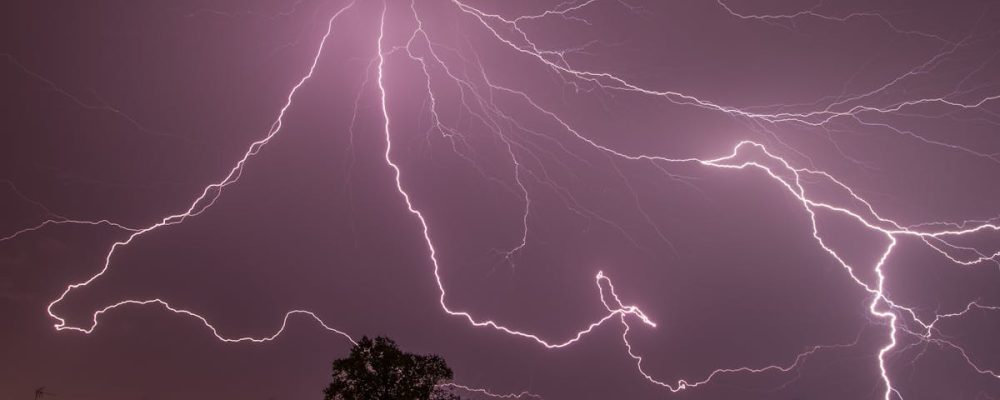
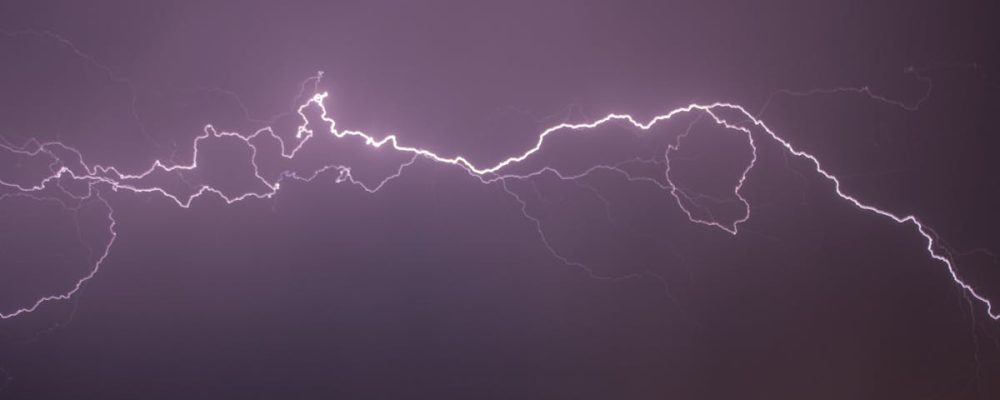
What About Lightning?
Lightning is often cited as “electricity moving fast.”
In reality:
Lightning involves ionized air (plasma)
Extremely high voltages
Complex step-leader processes
Even then, the visible flash propagates close to light speed, while charged particles move much more slowly.
Why This Matters in Engineering
Understanding the true speed of electricity is critical in:
High-speed circuit design
Signal integrity analysis
Power grid stability
Communication systems
Engineers care more about:
Propagation delay
Impedance
Phase shift
than electron speed itself.
Common Myths Debunked
❌ Electricity flows from the power plant to your device instantly as particles
❌ Faster electrons mean more power
❌ Long wires slow electricity significantly
✅ Energy transfer happens via electric fields
✅ Electrons move slowly but act together
✅ Distance affects timing, not functionality
Conclusion
Electricity feels instantaneous not because electrons move fast, but because electrical signals propagate incredibly quickly through conductors. While individual electrons drift at a slow pace, the electric field that drives them spreads at a speed close to that of light.
This distinction between particle motion and energy transfer explains why modern electrical systems can operate over vast distances with almost no delay. The next time you flip a switch, remember — the power doesn’t race through the wire. The entire system responds at once.
That’s the real speed of electricity.