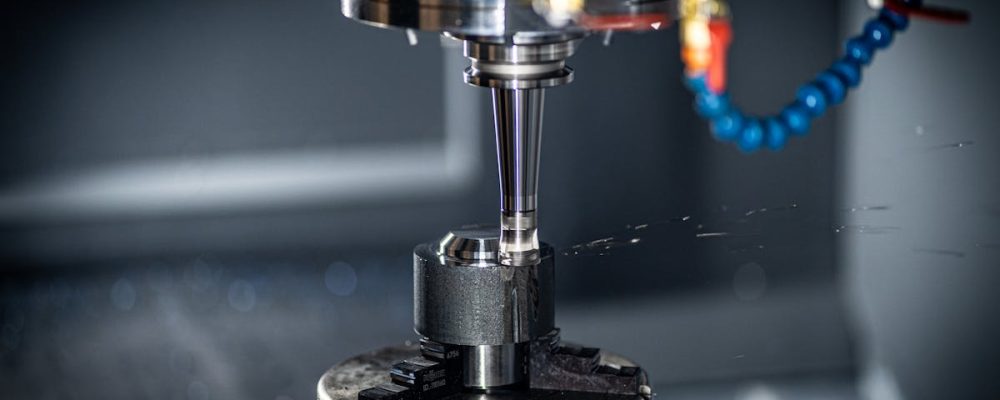
In CNC machining, dimensions are important, but Surface Finish is critical. You can hit the tightest tolerances (±0.01mm), but if the part looks like it was chewed by a dog, it will be rejected.
For industries like aerospace, medical, and automotive, surface roughness isn’t just about aesthetics; it affects friction, wear resistance, and fatigue strength.
In this comprehensive guide, we will explore how to measure surface finish (Ra vs. Rz), the factors that destroy your finish, and how to optimize your machining parameters for that “mirror-like” shine.

1. What is Surface Finish? 🔍
Surface finish (or surface roughness) refers to the texture of a machined part. No matter how smooth a surface looks to the naked eye, under a microscope, it is a landscape of peaks and valleys created by the cutting tool.
The goal of a machinist is to minimize these “valleys” to create a smooth, functional surface.

2. Measuring Surface Roughness: Ra vs. Rz 📏
If you look at an engineering drawing, you will often see symbols like Ra 1.6 or Ra 3.2. But what do they mean?
Ra (Average Roughness)
This is the most common industry standard. It calculates the arithmetic average of all peaks and valleys across a specific length.
Ra 3.2 µm: Standard rough machining (Roughing pass).
Ra 1.6 µm: Smooth finish (Standard finishing pass).
Ra 0.8 µm: Fine finish (Requires precise speeds and feeds).
Rz (Mean Roughness Depth)
Rz measures the vertical distance between the highest peak and the lowest valley. It is much more sensitive to extreme scratches than Ra.
Note: In Europe, Rz is often preferred for sealing surfaces.

3. Factors Affecting Surface Finish ⚙️
Why do some parts come out shiny while others look matte or scratched? It comes down to physics.
A. Spindle Speed and Feed Rate
This is the #1 cause of poor surface finish.
Low RPM + High Feed = High roughness (visible tool marks).
High RPM + Low Feed = Smooth finish.
However, going too slow on the feed rate can cause the tool to “rub” instead of cut, creating heat and poor finish.
Pro Tip: Don’t guess your parameters. Use our free CNC Feeds & Speeds Calculator to find the optimal RPM for Aluminum, Steel, or Stainless Steel.
B. Tool Deflection (Stick-out)
If your end mill is sticking out too far, it acts like a diving board. It vibrates (chatters) when it hits the material.
Rule of Thumb: Always hold the tool as short as possible.
C. Chip Evacuation
If chips are not cleared instantly (using coolant or air blast), the cutter recuts them. This “recutting” scratches the surface you just finished.

4. How to Improve Surface Finish (Optimization) 🚀
Want that mirror finish? Follow these 4 engineering rules:
1. Use “Climb Milling”
Always use Climb Milling (cutting in the direction of feed) rather than Conventional Milling. Climb milling deflects the tool away from the finished surface, leaving a cleaner cut.
2. Leave Stock for a Finish Pass
Never try to finish the part in one go.
Roughing: Remove bulk material fast.
Finishing: Leave 0.1mm – 0.2mm of stock, then come back with a high RPM and lower feed rate for the final “spring pass.”
3. Increase the Number of Flutes
For finishing, more flutes are generally better.
Roughing: 2 or 3 Flutes (Chip clearance).
Finishing: 4 or 5 Flutes (More cuts per revolution = smoother surface).
4. Check Your Runout
If your tool holder is dirty or old, the tool might wobble. Even 0.01mm of runout can ruin a surface finish calculation.

🏁 Conclusion
Achieving a perfect surface finish is a balance between Speed, Feed, and Rigidity. It differentiates a “hobbyist” part from a “professional” component.
Stop guessing your parameters and risking tool chatter. Start your process with the right math.
🚀 Ready to optimize? Use our Smart CNC Speeds & Feeds Calculator to generate the perfect cutting data for your next project.