
If Engineers Stop Working for 24 Hours, What Happens to the World? 🌍⚙️
Engineering is one of the few professions that most people rarely think about—until something breaks. Lights turn on, water flows, planes fly, phones connect, hospitals operate, and cities function smoothly. It all feels automatic. But what if it wasn’t? What if, for just 24 hours, engineers across the world stopped working?
No maintenance.
No monitoring.
No emergency response.
No system optimization.
At first, nothing dramatic would seem to happen. But beneath the surface, the foundations of modern civilization would begin to crack—fast.

Hour 0–3: Everything Seems Fine… For Now ⏱️
During the first few hours, most people wouldn’t notice anything unusual. Systems don’t instantly collapse when engineers step away. That’s because modern engineering is built on redundancy, automation, and safety margins.
Power grids still deliver electricity.
Internet connections still work.
Traffic lights still change.
Factories continue operating.
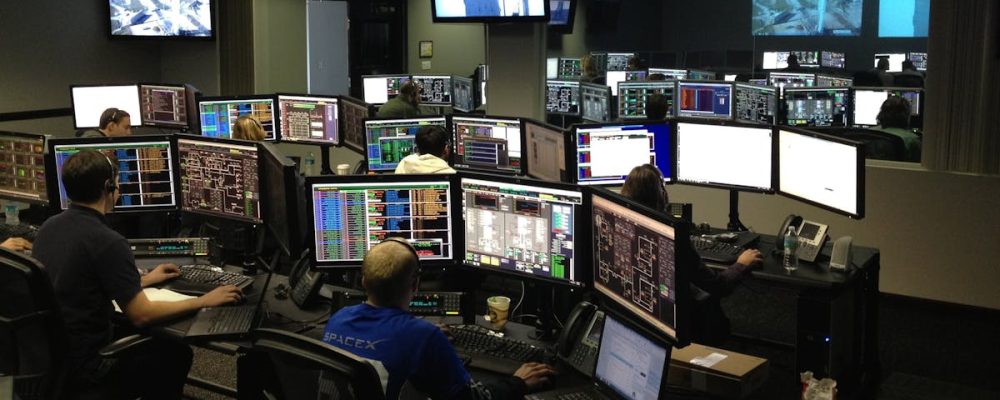
But here’s the catch: many of these systems require constant supervision. Engineers are always watching dashboards, analyzing sensor data, responding to anomalies, and preventing small issues from turning into disasters.
Without engineers:
No one is watching abnormal voltage spikes ⚡
No one is correcting network congestion 🌐
No one is responding to early warning alarms 🚨
The countdown quietly begins.
Hour 3–6: Small Problems Start Growing 🔧
Engineering systems rarely fail all at once. They fail in chains.
A transformer overheats slightly.
A data center cooling unit loses efficiency.
A water pump vibrates outside normal limits.
Normally, an engineer would catch this early and fix it before users notice. Without engineers, these “small” issues stay unresolved.
⚡ Power Systems
Electric grids need constant balancing. Electricity production must perfectly match consumption. Engineers actively manage this balance. Without them:
Frequency instability begins
Power quality degrades
Local outages start appearing
🌐 Internet & Networks
Traffic routing becomes less efficient. Network congestion builds up. Minor routing failures aren’t optimized away. Latency increases. Some regions experience slowdowns or dropped connections.
Still, the average person might just think:
“Huh, the internet feels a bit slow today.”
But the real damage is quietly stacking.
Hour 6–12: Critical Systems Feel the Pressure 🏥✈️
Now things start getting serious.
🏥 Healthcare Systems
Hospitals rely on engineers for:
Power backup systems
Medical device calibration
Networked patient monitoring
Imaging equipment
Without engineers:
Backup generators are running without supervision
Medical devices operate without technical oversight
IT systems become vulnerable
One failure here isn’t just inconvenient—it’s life-threatening.
✈️ Aviation & Transportation
Airplanes rely on engineering support far beyond pilots:
Radar systems
Communication networks
Airport power and navigation systems
Flights may still be in the air, but new problems cannot be properly assessed or fixed. Delays pile up. Safety margins shrink. Risk increases.
🏭 Industrial Production
Factories rely on engineers to:
Monitor machines
Adjust processes
Prevent mechanical failure
Without them, production slows or shuts down to avoid accidents.

Hour 12–18: Cascading Failures Begin 🌐⚡
This is where engineering truly proves its importance.
One power outage causes:
A data center to switch to backup
Internet services to reroute traffic
Communication delays across regions
But backup systems aren’t meant to run forever without oversight.
🔥 Data Centers Under Stress
Servers generate massive heat. Cooling systems must be finely tuned. Without engineers:
Cooling efficiency drops
Hardware throttles or shuts down
Cloud services become unstable
Streaming platforms lag. Online services crash. Financial systems slow down. Businesses lose money by the minute.
💧 Water & Waste Systems
Water treatment plants depend on engineering control systems. Without supervision:
Water pressure becomes unstable
Treatment quality degrades
Safety risks increase
At this stage, governments and operators would already be in emergency mode.
Hour 18–24: The World Starts to Feel Fragile 🚨
Now the illusion of “automatic civilization” completely disappears.
⚡ Large-Scale Power Failures
If engineers are still absent:
Power plants reduce output or shut down
Grid instability increases
Rolling blackouts begin
Once the grid starts failing, everything else follows.
🌐 Communication Breakdown
Mobile networks lose reliability. Internet access becomes patchy. Emergency services struggle to coordinate. Information flow slows dramatically.
💰 Economic Impact
Stock markets rely on high-frequency systems maintained by engineers. Financial networks require constant stability. Even short disruptions can cause massive losses and panic.
Banks limit services. Digital payments fail. Supply chains stall.

Why Doesn’t the World Collapse Instantly? 🤔
Because engineers already planned for failure.
Ironically, the reason a 24-hour engineer absence doesn’t instantly end civilization is engineering itself.
Redundant systems
Fail-safes
Emergency protocols
Automated controls
All designed by engineers who assume something will eventually go wrong.
But these defenses are temporary. They buy time—not permanence.
What This Thought Experiment Really Shows 💡
Engineers don’t just build things.
They keep the world alive.
They:
Prevent disasters before they happen
Maintain invisible systems
Manage complexity humans can’t see
Protect society from cascading failure
Most people only notice engineering when something breaks. But true engineering success is invisibility—systems that work so well that nobody thinks about them.

Conclusion: A World Held Together by Engineering ⚙️🌍
If engineers stopped working for just 24 hours, the world wouldn’t explode instantly—but it would begin to unravel. Slowly at first. Then faster. Power grids would destabilize. Internet systems would weaken. Healthcare, transportation, and industry would operate on borrowed time.
This isn’t about ego or importance. It’s about reality.
Modern civilization is not self-sustaining.
It is engineered, monitored, and protected every second.
So the next time everything “just works,” remember:
That silence is the sound of engineers doing their job perfectly. 👏⚙️