
Why Skyscrapers Don’t Collapse in Storms
The Engineering That Keeps Them Standing
When powerful storms hit major cities, skyscrapers are often the most visually striking targets of nature’s force. Strong winds, heavy rain, pressure changes — yet these massive structures rarely fail. This naturally raises a fascinating question: why don’t skyscrapers collapse during storms?
The answer lies in smart engineering, physics, and decades of lessons learned from wind, weather, and structural behavior. Skyscrapers are not built to resist storms by brute strength alone — they are designed to work with the forces of nature, not against them.

Skyscrapers Are Designed to Move — Not Stay Rigid
One of the biggest misconceptions is that buildings must be completely rigid to be safe. In reality, rigid structures are more likely to fail under extreme forces.
Modern skyscrapers are designed to sway.
This movement:
Absorbs wind energy
Reduces stress on joints and materials
Prevents cracking and structural fatigue
During a strong storm, a tall building may sway several centimeters or even meters at the top — and that’s intentional. Occupants usually don’t feel it, but the structure is constantly adjusting itself to wind forces.
Understanding Wind Load
Engineers design skyscrapers based on something called wind load — the force exerted by moving air on a structure.
Wind load depends on:
Wind speed
Building height
Shape and surface area
Surrounding buildings
The higher you go, the stronger and more unpredictable wind becomes. At extreme heights, wind can behave very differently than it does near the ground.
That’s why wind is often a greater design challenge than earthquakes for tall buildings.
Aerodynamic Building Shapes
Older buildings were often boxy and flat. Modern skyscrapers are shaped more like aircraft wings or tapered towers.
Why?
Because sharp edges and flat surfaces:
Create turbulence
Increase pressure
Amplify oscillations
Modern designs include:
Rounded corners
Tapered tops
Setbacks and twists
These features break up wind flow, reducing the forces acting on the structure.
A famous example is the Burj Khalifa, whose stepped design confuses wind patterns and prevents large oscillations.
The Role of Tuned Mass Dampers
Some skyscrapers contain massive hidden devices called tuned mass dampers.
A tuned mass damper is:
A huge weight (often hundreds of tons)
Suspended near the top of the building
Designed to move opposite to the building’s sway
When wind pushes the building one way, the damper moves the other way, canceling out motion.
One of the most famous examples is Taipei 101, which has a 660-ton steel sphere acting as a damper. During storms and typhoons, this system significantly reduces sway and structural stress.

High-Strength Materials and Redundancy
Skyscrapers are built using:
Reinforced concrete
Structural steel
Composite materials
But strength alone isn’t enough. Engineers use redundancy, meaning:
Multiple load paths
Backup structural elements
Fail-safe design philosophy
If one component fails, the load automatically redistributes through the structure instead of causing collapse.
This principle is similar to how aircraft are designed — a single failure should never be catastrophic.
Deep Foundations That Anchor the Building
A skyscraper’s stability starts underground.
These buildings rest on:
Deep pile foundations
Bedrock anchors
Massive reinforced concrete mats
Some foundations extend dozens of meters below ground, ensuring the building remains stable even when wind applies enormous overturning forces at the top.
Without strong foundations, no amount of clever design above ground would matter.

Wind Tunnel Testing Before Construction
Before construction begins, engineers test scale models of skyscrapers in wind tunnels.
These tests simulate:
Extreme storm conditions
Changing wind directions
Interaction with nearby buildings
Data from wind tunnel tests helps engineers:
Adjust building shape
Optimize structural systems
Predict real-world behavior
This means skyscrapers are tested against storms before they even exist.
Why Storms Are Less Dangerous Than You Think
Interestingly, storms rarely pose the biggest threat to skyscrapers.
Why?
Wind loads are predictable
Structures are designed with large safety margins
Materials are chosen to handle repeated stress cycles
Sudden failures usually come from design flaws, construction errors, or unexpected load combinations, not normal storms.
Modern building codes are extremely conservative — meaning skyscrapers are often capable of handling conditions far worse than they will ever experience.

Comfort vs Safety: Human Perception
Even though buildings are safe, excessive movement can cause:
Motion sickness
Anxiety
Discomfort
That’s why engineers don’t just design for structural safety — they design for human comfort.
Limits are set on:
Acceleration
Frequency of movement
Maximum sway
Tuned dampers and aerodynamic shaping help keep movement within comfortable levels.
Lessons Learned From Past Failures
Engineering evolves through failure.
Historic events, such as:
Wind-induced oscillations in early towers
Structural fatigue discoveries
Material performance issues
have shaped modern skyscraper design.
Each storm, each data point, and each building adds to a growing understanding of how tall structures interact with the atmosphere.
The Bottom Line
Skyscrapers don’t collapse in storms because they are:
Designed to move, not resist
Aerodynamically shaped
Reinforced with advanced materials
Anchored deep into the ground
Tested under extreme conditions
What looks like a fragile glass tower is actually a carefully balanced system, constantly adapting to its environment.
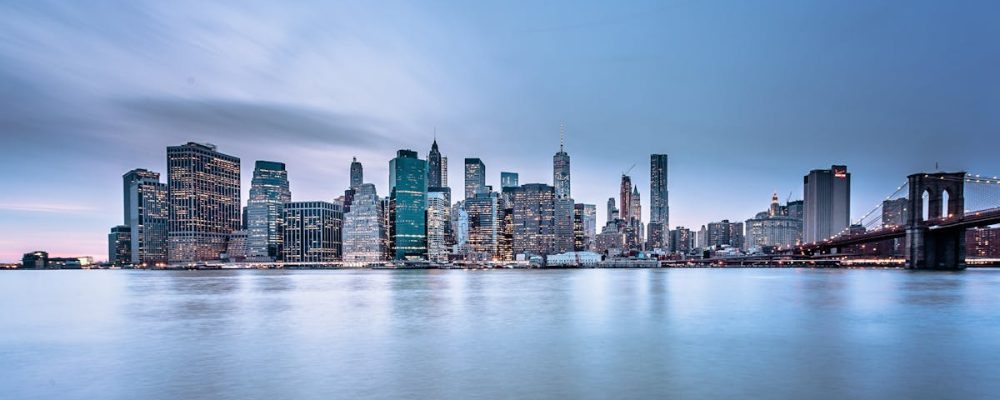
The next time a storm hits and you see a skyline standing tall, remember — it’s not luck.
It’s physics, engineering, and smart design working together.

Conclusion
Skyscrapers are not just tall buildings; they are carefully engineered systems designed to survive in some of the harshest conditions nature can produce. Storms, strong winds, and extreme weather are not unexpected events — they are part of the design process from the very beginning.
By allowing controlled movement, using aerodynamic shapes, incorporating advanced damping systems, and relying on deep, stable foundations, engineers ensure that skyscrapers remain safe and functional even during severe storms. What may look like a rigid structure is, in reality, a flexible and intelligent design responding constantly to its environment.
As cities continue to grow vertically, the science behind skyscraper design will only become more advanced. Future towers will be even safer, more efficient, and better adapted to extreme weather — proving that engineering, when done right, can stay one step ahead of nature.